Seven miles from Sydney, and a thousand miles from care (Manly Ferry project)

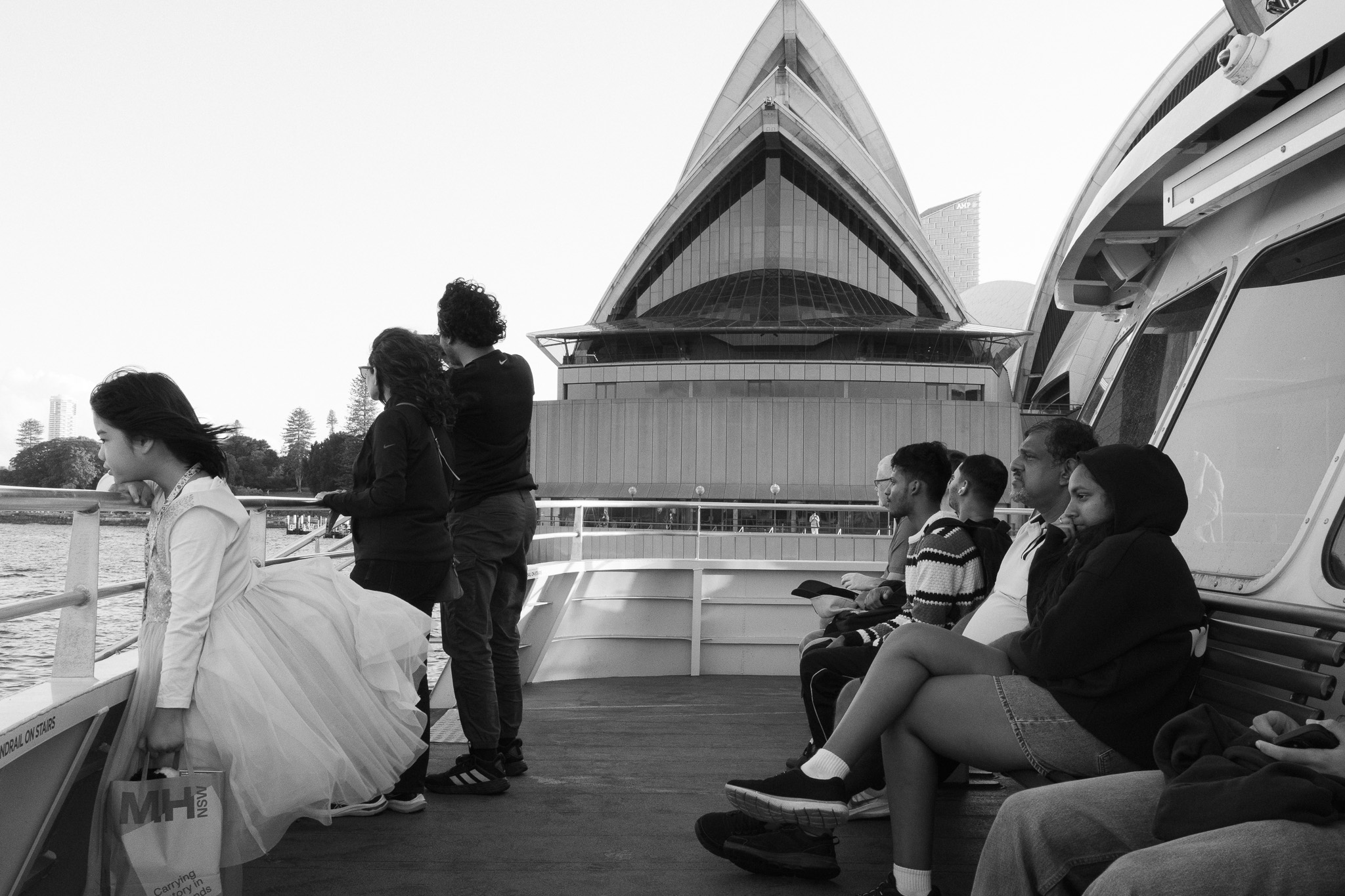
This is an ongoing project on the Manly Ferry and Manly Fast Ferry, documenting passengers as they cross the bay to their destination. The project began around 2023, when I first got my camera and started my journey in street photography. Unlike doing street photography on the literal street, the ferry offers no escape neither for you from your subject nor for them from you. This creates an interesting dynamic, as you can’t be as brazen as you might be on the street.
The passengers shift from mainly work commuters during peak hours to a mix of tourists and commuters outside those times. The general way people interact with the ferry changes depending on who is on board. Work commuters tend to be more blasé about the trip, as it’s part of their daily routine. Most are on their phones, with a few chatting to acquaintances or friends. For tourists, however, the ride is a novelty and an exciting experience. They are often with children or family, and their interactions on the ferry are much more animated, playful, and enthusiastic compared to the regular commuters.
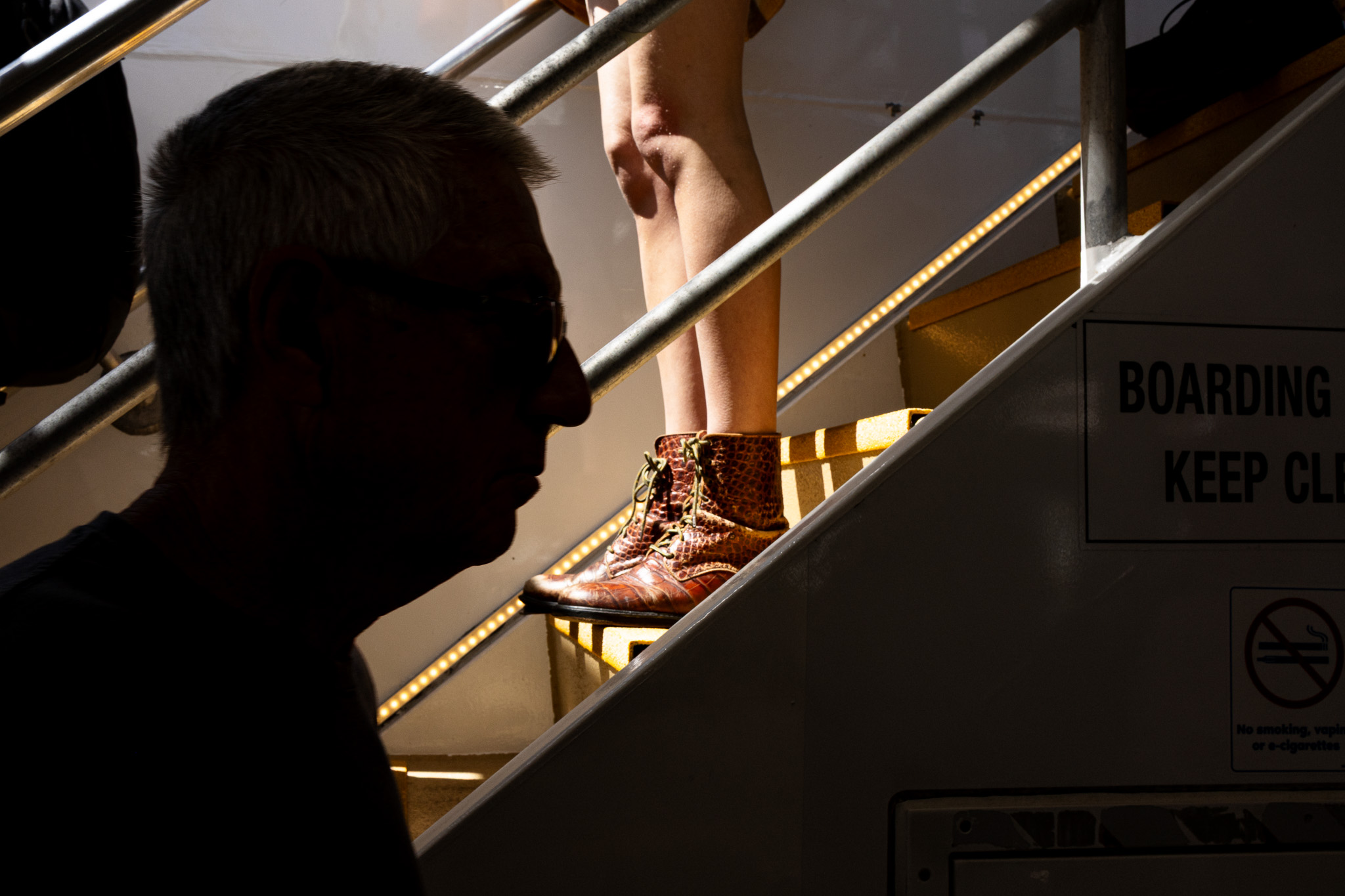
As a photographer, the lighting on the ferry is a delight. Sunset and sunrise last much longer than they do in the city, where the sun is often blocked by tall buildings depending on the time of day. The ride has roughly a 50–60 degree bend, so the light shifts from one side of the ferry to the other during the trip, becoming especially pronounced during golden hour. This gives the photographer the opportunity to shoot people on both sides, as most passengers tend to stick to one side for the journey. Reflections are also very prominent, and the windows create great opportunities for layering. Passengers inside are wonderful to photograph from outside, as the windows reflect the scenery and create beautiful layered compositions around the subject.
Since the ferry is relatively small, there’s only a limited area to explore, and the range of ideas you can photograph is more restricted compared to the street. This creates a great opportunity to push the creative boundaries of something you shoot frequently. The limitation allows you to explore the same concepts with much greater depth, unlike the openness of the street, where you’re free to roam as you please. It becomes a more deliberate, almost enforced approach to creative constraint, rather than one that relies purely on discipline.